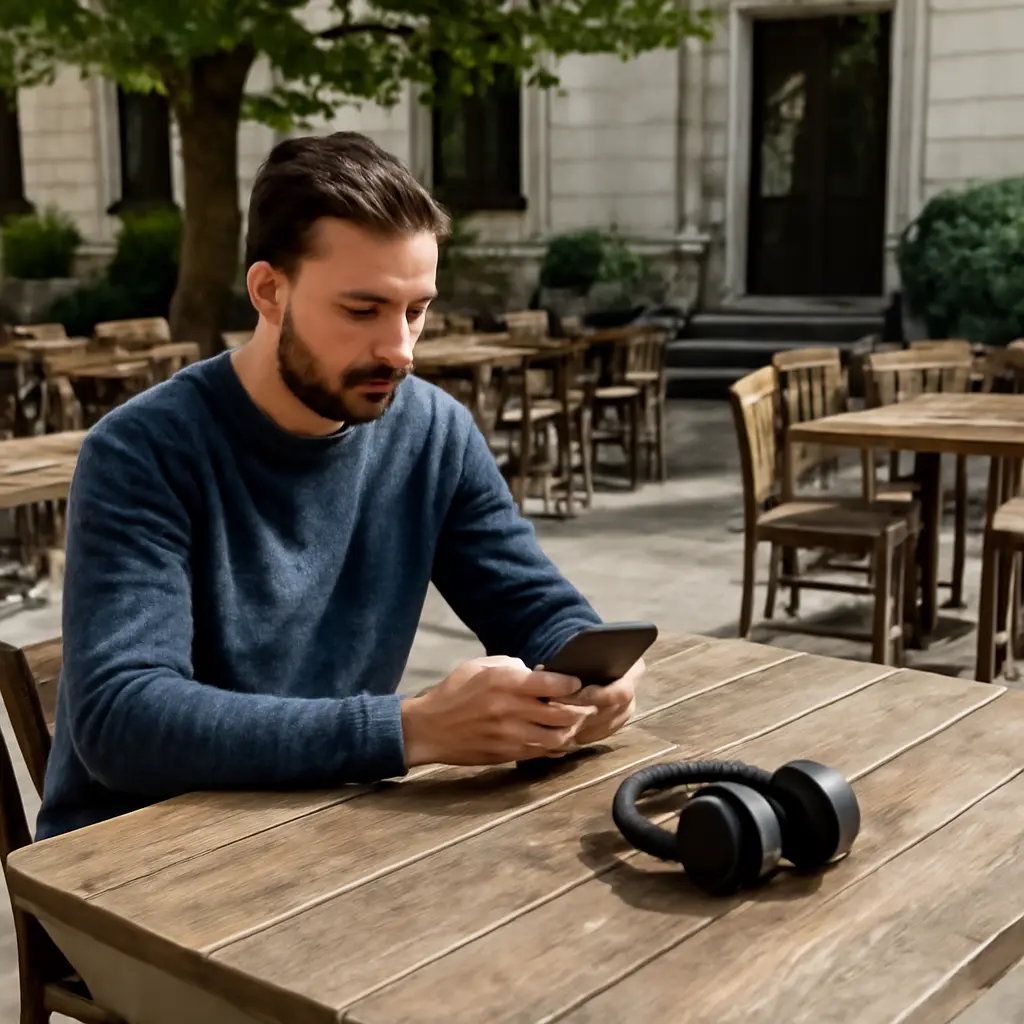
Trending-audio recognition apps identify a song or sound from a short recording, helping creators find a track they heard in a video, in a shop, or playing nearby. The most dependable approach is to use a music-recognition service such as Shazam for the recording, then check TikTok or Instagram’s own audio libraries to confirm whether that sound is currently popular and available for reuse. These tools solve different problems: song identification is not the same as trend tracking, and neither guarantees that a sound is licensed for every use. That distinction matters in a creator economy where, according to DataReportal’s 2024 global overview, social media user identities reached 5.04 billion.
Audio recognition apps identify tracks, not trends by themselves
Audio recognition is the process of matching a recorded sound against a database of known recordings, usually by analyzing a compact acoustic fingerprint. Shazam describes its matching technology as identifying songs from a brief sample, even when the recording contains background noise. In practical terms, the app can tell you what a sound is; social platforms and trend-monitoring tools provide the context to judge whether it is gaining attention.
The main categories are dedicated recognition apps, platform-native audio search, and trend analytics services. They overlap, but their strengths differ: a recognition app is useful for identifying a song heard offline, a platform library links audio to posts and reuse options, and analytics tools help compare a sound’s momentum across videos or time. No single tool reliably covers all three jobs.
Shazam for identifying a song from a clip
Shazam is a music-identification service that listens to a short sample and returns a likely match, along with details such as artist and track title. It is a strong first step when a creator hears an unfamiliar song in a public place or wants to identify the original recording behind a social video. Apple says Shazam can recognize music playing around the user and music playing in apps on supported devices.
A Shazam result confirms a match in its catalog, not that the track is trending. Search the matched title inside TikTok or Instagram afterward and inspect recent posts using the sound. A song may be recognizable yet have little current platform activity; conversely, a viral sound may be a sped-up edit, dialogue sample, or other variant that does not match the original track cleanly.
SoundHound for music identification and voice search
SoundHound is another music-recognition app, with features that include identifying music and searching by singing or humming, depending on the feature and current app availability. That can help when the audio is not playing clearly enough for a standard listen-and-match query. As with Shazam, treat the result as an identification lead rather than evidence of a trend.
Recognition can fail when a clip is very short, heavily altered, obscured by speech, or absent from the service’s catalog. When the result is uncertain, try a longer and cleaner sample, search a distinctive lyric, or compare the audio with the candidate track in the social app itself.
Platform audio pages for checking whether a sound is being reused
TikTok and Instagram audio pages connect a sound to posts that use it, making them more useful than a standalone recognizer for checking social context. TikTok’s Creative Center also provides trend-oriented discovery features, including popular songs and related filters in supported markets. Instagram’s Reels audio browser lets users explore audio and see Reels associated with a track, although availability and trend indicators can vary by region, account, and app version.
A high post count can indicate adoption, but it does not reveal the full story. The sound may have accumulated uses over months, be concentrated in one community, or be rising quickly from a small base. Check the dates of recent examples, how many distinct creators are using it, and whether the sound page points to the same recording or a derivative edit.
Trend tracking evaluates momentum after recognition
A trending audio snippet is a sound that is experiencing increasing or notable use in a particular online community during a defined period. There is no universal, cross-platform definition of “trending”: each platform has its own audience, recommendation systems, reporting tools, and measures. For creators, the useful question is not simply whether a sound is popular, but whether its recent momentum and format fit the intended post.
This is why trend discovery combines several signals: recency, reuse, creator diversity, and relevance. A sound with fewer total uses but accelerating activity may be more timely than a long-established hit. Meanwhile, an audio trend can fade quickly, so a result should be checked close to publication rather than saved indefinitely as a guarantee of future reach.
TikTok Creative Center for platform-specific discovery
TikTok Creative Center is a discovery and planning resource for advertisers and creators, with trend information such as popular songs, hashtags, creators, and videos in supported locations. Its value is that it keeps discovery within TikTok’s own ecosystem, where the sound’s recent use and the platform’s available music options can be examined together. The exact filters and visibility of data can change over time and by market.
Use it to generate candidates, then open the relevant sound in TikTok and review current posts. Look for repeated creative formats, not just a large number beside the track. A sound may be popular because of one specific joke, transition, or caption pattern; copying the audio without understanding that format can make a post feel late or disconnected.
Instagram Reels audio search for reuse context
Instagram’s Reels audio tools help users browse music and sounds available for Reels and inspect content associated with audio pages. They are useful for confirming that a track can be selected in Instagram and for seeing how other accounts are applying it. Availability is not uniform: music access can depend on location, account type, licensing arrangements, and the particular audio.
If a track identified elsewhere does not appear in Instagram’s library, do not assume that uploading the recording yourself is an equivalent or permitted workaround. Choose an approved in-app version or another cleared sound, especially for branded or commercial content.
Third-party analytics for comparing activity
Social-media analytics products can help teams organize examples, monitor content, and compare performance signals. Their coverage and definitions differ, and many cannot see every platform’s internal trend data. Treat third-party trend rankings as directional evidence, then verify the sound and its current activity directly in the platform where you plan to publish.
For a practical comparison, record the date checked, the number of recent examples, the apparent pace of new posts, and the format being repeated. A simple chart with date on the horizontal axis and new uses or observed posts on the vertical axis can reveal whether interest is accelerating, stable, or declining. This is more informative than a single lifetime-use count.
A verification workflow reduces false matches and stale trends
The most reliable workflow separates identification, trend validation, and publishing rights. Recognition apps answer “What is this sound?” Platform tools answer “Are people using it here now?” Licensing and account settings answer “Can I use this version for this post?” Checking all three prevents a common mistake: finding a recognizable song and assuming that it is both trending and cleared for any purpose.
Identify the sound and verify the exact version
Start with Shazam or SoundHound when the sound is playing nearby, or use a platform’s audio page when the clip is already in a post. Compare the result against the actual snippet. Social sounds are often edited, sped up, slowed down, remixed, or combined with spoken audio, so the popular version may not be the original catalog track.
Check recency, reuse, and creative fit
Open the sound in the target platform and examine recent posts rather than relying on a third-party claim or an old screenshot. Check whether several unrelated creators are using it, whether new examples appeared recently, and whether the trend’s format suits the message. A sound’s popularity is not a substitute for audience relevance or a well-made video.
Review music permissions before publishing
Music access is governed by platform terms, licensing agreements, territory, and account or usage type. Meta’s music guidelines and TikTok’s business guidance distinguish ordinary creator use from commercial use, and business accounts may have access to a more limited commercial music selection. For advertising, client work, or other commercial posts, use music explicitly available for that purpose or obtain the appropriate rights; a recognition result alone provides no permission.
App choice depends on the creator’s use case
For a casual user who hears a song in the world, Shazam is a straightforward first choice, with SoundHound as an alternative when humming or voice-based search is useful. For a creator looking for an emerging TikTok sound, TikTok’s own discovery tools and sound pages are more directly relevant. For Instagram publishing, use Reels audio search to confirm the available version. Teams that need recurring measurement can add analytics, while retaining platform-native verification.
- Identify an unfamiliar recording: Shazam or SoundHound.
- Check TikTok adoption and examples: TikTok sound pages and Creative Center.
- Confirm Instagram availability and examples: Instagram Reels audio browser.
- Compare activity over time: a suitable analytics tool plus a dated manual log.
- Publish branded or commercial content: verify the platform’s commercial-use music permissions.
Conclusion: combine recognition with platform verification
Apps that recognize audio snippets work best when each is used for its intended job. Shazam and SoundHound can identify a track; TikTok and Instagram can show how audio is being used within their own communities; trend tools and dated observations help assess momentum. Because trend status changes quickly and music rights vary, creators should verify the exact version, recent reuse, platform availability, and permissions before publishing. Start with a recognition app, confirm the sound on the target platform, and save a dated record of what you find rather than relying on a popularity claim alone.
Sources: DataReportal, Digital 2024: Global Overview Report, https://datareportal.com/reports/digital-2024-global-overview-report; Apple, Shazam: Music Discovery, https://www.shazam.com/; SoundHound, SoundHound Music App, https://www.soundhound.com/soundhound/; TikTok, Creative Center, https://ads.tiktok.com/business/creativecenter/; Instagram, Create Reels with your own audio or audio from Instagram’s audio library, https://help.instagram.com/; Meta, About music in your content on Facebook and Instagram, https://www.facebook.com/legal/music_guidelines; TikTok, Commercial Music Library, https://ads.tiktok.com/business/creativecenter/music.