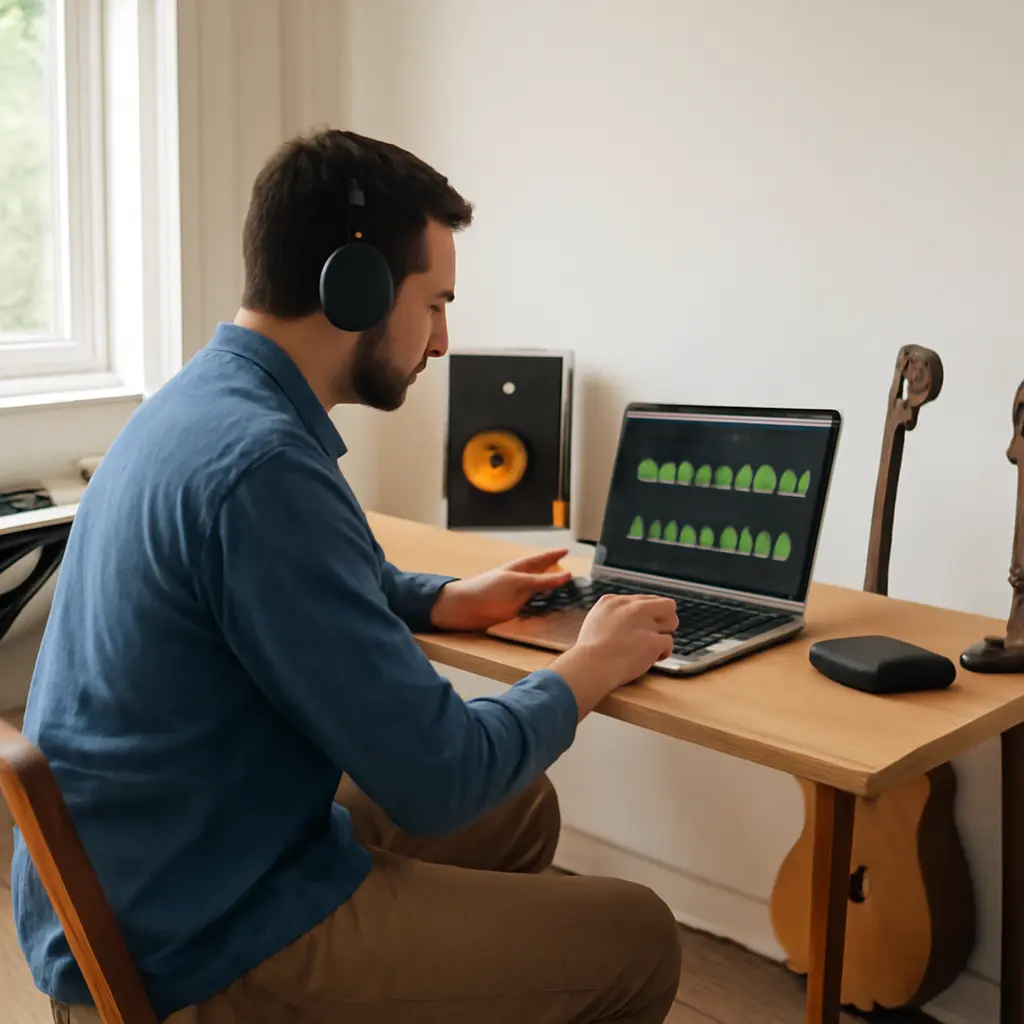
A viral sound is an audio clip—often a song excerpt, chorus, beat, or remix—that spreads rapidly through social platforms as people reuse it in videos and other posts. Viral sounds can help determine which songs break into the charts, sometimes before traditional radio promotion or a major-label campaign takes hold. But they do not make labels irrelevant: streaming, radio, marketing, and distribution still shape whether online attention becomes sustained listening. TikTok’s 2024 music report said that 13 of the 16 songs that reached No. 1 on the Billboard Global 200 in 2023 had a TikTok trend associated with them, illustrating the platform’s reach while not proving that a trend alone caused chart success. The clearest picture comes from examining how sound virality works, how it translates into measurable chart activity, where labels remain influential, and what the shift means for artists.
Viral sound discovery reshapes music chart success
Viral sound discovery is the process by which listeners encounter and circulate music through short-form video, social sharing, and creator activity. Its chart impact is visible in the way a song can move from a brief clip to repeated streams, downloads, radio interest, and chart placement. TikTok’s report on 2023 music trends documented a strong association between platform trends and global No. 1 hits; Billboard, meanwhile, calculates its U.S. charts using defined measures such as streaming, radio airplay, and sales. These are related but distinct facts: a viral trend can create discovery, while chart rules determine how resulting activity is counted.
The shift matters because discovery has become more distributed. A creator can make an older track newly relevant, an independent artist can attract an audience without first securing extensive radio play, and a major label can amplify a trend once it shows promise. The result is not simply “social media replacing labels,” but a faster feedback loop between creators, listeners, platforms, rights-holders, and chart measurement.
Viral sound discovery drives chart activity through repeatable mechanisms
A viral sound is a reusable piece of audio that gains circulation because people adopt it in their own posts. TikTok describes its music trends through platform activity and reports associations between sounds, trends, and listening outcomes; its figures should therefore be read as platform-reported evidence, not as a controlled demonstration that a trend independently caused a chart position. The relevant characteristics include reuse, recognizability, a clear moment that fits video storytelling, and the ability to prompt imitation or participation.
Short-form sound reuse
Sound reuse occurs when multiple creators attach the same audio to distinct videos. A chorus, lyric, instrumental drop, or unexpected transition can become a template for dances, jokes, reactions, or personal stories. This repeated exposure may prompt viewers to search for the full song or stream it elsewhere, although the conversion depends on audience interest and the availability of the track. TikTok’s annual music reporting highlights this connection between sounds used in videos and music discovery, while chart organizations count activity according to their own rules rather than treating every video use as a stream.
Recommendation and discovery loops
Recommendation systems can intensify a trend by showing users videos related to their viewing and engagement patterns. When a sound prompts repeated viewing, sharing, or participation, more people may encounter it, creating a loop between exposure and reuse. This is a mechanism, not a guarantee: platform reach varies, and attention may remain confined to clips rather than becoming sustained listening. The distinction is important when comparing viral visibility with chart success, since Billboard’s charts use eligible consumption and airplay data rather than raw social impressions.
Chart conversion from attention to listening
Chart conversion means turning social attention into measurable music consumption. Billboard’s Hot 100 combines streaming, radio airplay, and sales, so a viral song can benefit if online interest produces eligible streams or purchases and if it also gains radio support. The precise weighting and eligibility rules can change over time, making it important to consult the chart methodology for the period being discussed. A clip’s view count is not itself a chart unit, and high social engagement does not ensure a hit if listeners do not seek out the full recording.
Viral sound pathways include new releases, catalog revivals, and creator-led hits
Not all viral songs follow the same path. Some sounds introduce a new release; others revive a catalog recording or build momentum around an independent artist. These categories help explain why online discovery can appear to outpace traditional promotion while still relying on the infrastructure of labels, distributors, publishers, and streaming services.
New-release breakouts
A new-release breakout occurs when a song gains social traction soon after release. A memorable lyric or a section that works well in a short video can give listeners an entry point before they know the full track. TikTok’s 2024 report said that 13 of the 16 songs reaching No. 1 on the Billboard Global 200 in 2023 had an associated TikTok trend. This is a striking cross-platform association, but it does not establish that TikTok alone generated those No. 1 placements: artist recognition, label promotion, streaming playlists, radio, and other marketing may also have contributed.
Catalog revivals
A catalog revival happens when a previously released recording returns to public attention. Social videos can give an older song a new context, encouraging listeners to stream it, search for its origin, or use it in their own posts. This pathway can benefit both recordings and songwriters, but the rights and revenue effects depend on ownership, licensing, and the relevant platform’s agreements. Catalog revivals also show why a song’s release date alone is a poor guide to its cultural or commercial life.
Creator-led and independent breakthroughs
Creator-led breakthroughs occur when an artist or fan community supplies the initial momentum rather than a large, highly visible promotional campaign. Digital distributors and streaming services can make recordings available broadly, while social platforms provide a way to find audiences. Yet distribution access is not the same as guaranteed reach: artists still compete for attention, manage rights, and often need professional support to sustain momentum. Viral discovery can lower some barriers to exposure without removing the economic and promotional advantages that established companies possess.
Record labels still influence how viral attention becomes durable success
Record labels are companies that invest in, market, distribute, and commercially manage sound recordings under agreements with artists. Their influence is changing rather than disappearing. A viral moment may originate with creators or fans, but labels can help coordinate release strategy, fund promotion, negotiate partnerships, and extend attention across radio, playlists, press, and live opportunities. The Recording Industry Association of America’s annual revenue reports document the continuing scale of recorded-music income, while Billboard’s chart methodology shows that chart performance reflects more than social-media activity.
Marketing and amplification
Marketing amplification is the organized effort to convert initial interest into broader and longer-lasting awareness. Label teams may coordinate advertising, publicity, creator partnerships, release timing, and radio campaigns. Those activities can reinforce an existing trend, but they cannot reliably manufacture authentic audience participation on demand. The relationship is therefore complementary: creators can provide cultural relevance and rapid discovery, while label resources can help a promising song reach additional audiences.
Distribution, licensing, and rights management
Distribution makes recordings available to services and markets; licensing and rights management determine how recordings and compositions may be used and how revenue is allocated. These functions become especially important when a sound spreads across platforms, where the recording and the underlying composition can involve different rights-holders. A viral trend may create demand, but legal availability and accurate metadata affect whether the recording can be used, identified, and monetized properly.
Long-term career development
Long-term development means sustaining an audience after the first spike in attention. That can involve follow-up releases, touring, fan engagement, brand partnerships, and financial planning. A viral moment is often brief and unevenly distributed, so a high number of views does not necessarily translate into stable income or a lasting career. Artists and labels alike need to assess whether new listeners return to the music, attend shows, or engage with later releases.
Viral music success has limits, measurement gaps, and strategic risks
Viral popularity is difficult to compare directly across platforms because each service measures different actions: video views, sound uses, streams, saves, shares, or sales. These measures describe different kinds of engagement, and none alone captures the full value of a song. The Recording Industry Association of America tracks U.S. recorded-music revenues by format, while chart companies publish separate ranking methodologies; neither should be treated as interchangeable with platform trend counts.
A trend is not proof of causation
A correlation between a platform trend and chart success does not establish that the trend caused the success. A song may already be popular before a viral moment, and the same marketing campaign may increase social activity, streaming, and radio play at once. Platform-reported case studies are useful indicators of reach, but stronger causal claims require careful methods that account for timing, prior popularity, promotion, and audience overlap.
Attention can fade quickly
Viral attention may rise sharply and then decline when users move to a new sound. Artists can reduce this risk by giving new listeners a clear path to the full catalog, releasing follow-up material thoughtfully, and building direct relationships with fans. The goal is not simply to maximize a short-lived trend but to convert discovery into repeat listening and a deeper connection with the artist.
Platform dependence creates uncertainty
Platform dependence occurs when an artist’s visibility relies heavily on one company’s recommendation system, format, or commercial policies. Changes to algorithms, licensing terms, or user behavior can quickly alter reach. Diversifying discovery across streaming services, live performance, email lists, community channels, and other media can help reduce that exposure. For the industry, transparent reporting and consistent measurement would make it easier to distinguish genuine audience growth from temporary bursts of platform activity.
Conclusion: viral sounds change the route to chart success, not every rule
Viral sound discovery can accelerate music exposure, create new-release breakouts, revive catalog recordings, and give independent creators a route to wider audiences. TikTok’s reported association between trends and many 2023 global No. 1 songs demonstrates the scale of the connection, while Billboard’s chart methodology makes clear that social attention must translate into eligible listening, sales, or airplay to affect rankings. Record labels remain consequential through marketing, distribution, rights management, and career development, even as creators and platform communities increasingly shape the first stage of discovery.
For artists and industry professionals, the practical lesson is to treat virality as an opportunity rather than a strategy that guarantees success. Track how social engagement converts into streams and returning fans, understand the rights attached to each recording, and build routes to audiences beyond a single platform. Readers can learn more by comparing official chart methodology with platform music reports and recorded-music revenue data.
Sources: TikTok, Music Impact Report 2024, https://newsroom.tiktok.com/en-us/music-impact-report-2024; Billboard, Billboard Hot 100, https://www.billboard.com/charts/hot-100/; Billboard, Charts Legend, https://www.billboard.com/billboard-charts-legend/; Recording Industry Association of America, 2023 Year-End Music Industry Revenue Report, https://www.riaa.com/reports/2023-year-end-music-industry-revenue-report-riaa/