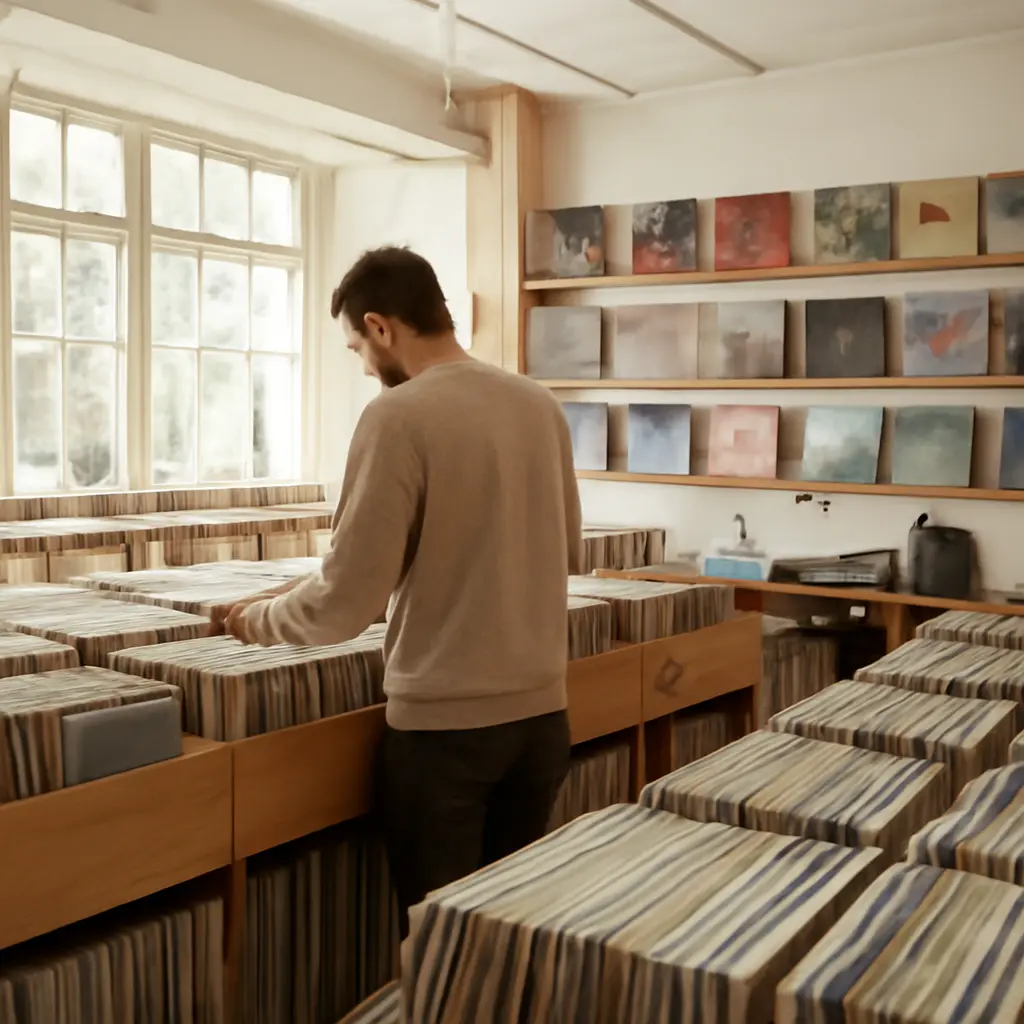
Vinyl records are physical music albums pressed into grooves that a turntable’s stylus reads to produce sound. Their comeback is real, but many younger buyers are drawn less by claims of superior audio than by the tangible experience: collectible artwork, ownership, discovery, and a visible connection to music. The Recording Industry Association of America (RIAA) reported that U.S. vinyl revenue reached $1.4 billion in 2023, its 17th consecutive year of growth, while sales by unit were strongest among formats bought by younger music fans. Those figures help explain the trend—but they do not, on their own, explain why a teenager chooses a record over a playlist.
Vinyl’s resurgence reflects ownership more than sound quality
The vinyl revival is the sustained return of new and used record sales after decades in which CDs and digital files displaced records as the mainstream format. The RIAA defines its recorded-music revenue categories by format and reported that vinyl generated more U.S. revenue than CDs in 2022 for the first time since 1987. That is a meaningful industry shift, but revenue is not the same as the number of listeners: a record typically costs more than a single digital stream or download.
Young buyers are not one uniform audience, and available industry data generally measure sales rather than individual motives. Still, the broader context is clear. Streaming provides fast, inexpensive access to vast catalogs; vinyl offers a different kind of value, based on owning an object, displaying it, handling it, and choosing to listen in a more deliberate way. The distinction is less “old sound versus new sound” than “access versus possession.”
A growing market does not prove that everyone is buying a turntable
RIAA revenue data confirm the commercial revival, but they do not reveal whether each buyer owns a working record player, how often a record is played, or whether it was bought as a gift. Industry sales counts can also include multiple editions of the same album purchased by one fan. The figures demonstrate demand for records as products; they should not be treated as a direct measure of routine listening.
That distinction matters when interpreting young consumers’ interest. A record can function as a listening format, a collectible, a piece of room décor, or a way to support an artist. For some purchasers, those uses overlap; for others, the object itself is the appeal.
Streaming and vinyl serve different purposes
Streaming remains the everyday utility: it makes discovery and repeat listening easy across devices. Vinyl is slower and less portable, but that friction can be part of its appeal. Choosing an album, removing the disc from its sleeve, and turning it over creates a focused ritual that a shuffled playlist does not provide.
The formats are therefore not necessarily competitors for the same moment. A listener may stream music while traveling and buy a vinyl edition of a favorite album to keep, display, or play at home. The shift from access to ownership leads directly to the first major reason younger fans are interested in records: physical connection.
Vinyl’s physical format makes fandom visible and collectible
Vinyl’s physical appeal comes from its large-scale packaging and material presence: the sleeve, artwork, printed inserts, colored discs, and the record itself. In consumer behavior, a collectible is an item valued not only for practical use but also for its identity, scarcity, emotional meaning, or place in a collection. A music record can meet several of those criteria at once.
This is especially relevant in a digital environment where millions of tracks can be accessed through one app but remain largely invisible. A record takes up space and makes a preference legible. A shelf of albums can show a listener’s interests to friends, while a special edition can mark a tour, a release, or a personal connection to an artist.
Album artwork turns music into a display object
A 12-inch sleeve gives cover art room to function as visual design rather than a small thumbnail. The packaging may include lyrics, photographs, credits, posters, or notes that deepen the listener’s relationship with the release. That makes the album a hybrid object: part music, part artwork, and part keepsake.
The appeal is not exclusive to teenagers, but it fits a culture in which people share rooms, collections, outfits, and music tastes through images and social platforms. A record can be both something to play and something to show. That visibility helps explain why a format associated with older generations can still feel relevant to new ones.
Limited editions and variants encourage collecting
Record releases often come in multiple variants, such as colored vinyl, alternate covers, numbered pressings, or retailer-exclusive editions. These variations turn a standard album into a collectible market in which rarity and design can influence demand. The practice can also encourage fans to buy more than one version, so high unit sales do not necessarily mean an equally high number of unique listeners.
For a young fan, a special pressing can feel like a more personal or memorable purchase than adding an album to a digital library. But scarcity marketing has limits: multiple editions can raise costs and frustrate buyers when a release is difficult to find. The collectible dimension is strongest when the item carries genuine meaning, not simply when it is labeled limited.
Physical ownership offers a durable sense of attachment
Buying a record gives a fan a lasting object tied to a particular album, artist, or moment. That differs from streaming access, which depends on subscriptions, licensing agreements, and platform availability. A physical copy can remain on a shelf even if a song leaves a service, although records can be damaged, lost, or become difficult to replace.
Ownership also makes music purchasing more intentional. A listener may decide which album deserves the expense and shelf space, rather than saving an unlimited number of tracks. That selectiveness connects collecting to a second motivation: the pleasure of ritual and discovery.
Vinyl listening turns music into a deliberate ritual
A listening ritual is a repeated sequence of actions that gives an activity structure and attention. With vinyl, that sequence may include selecting a record, reading the sleeve, placing the disc on a turntable, lowering the stylus, and turning the record over. The process makes playback less automatic than opening an app.
There is no requirement that listeners sit motionless and hear every track. But vinyl’s practical constraints—one record at a time, finite playing sides, and manual track selection on many setups—encourage a more album-centered experience. For fans accustomed to skipping among songs, that can make an album feel like a complete work rather than a list of separate tracks.
The album format encourages focused listening
A vinyl album generally presents music in a planned sequence across two sides. That structure can invite listeners to follow transitions, themes, and pacing that might be overlooked when tracks are shuffled. It does not guarantee deeper attention, but it creates a setting in which the album’s order is more prominent.
The format also creates natural pauses. Changing sides interrupts playback, which can encourage a break or give the listener a moment to reflect. For some younger fans, that is a welcome contrast to an always-on stream; for others, it is inconvenient. The appeal depends on whether the added effort feels like meaningful participation or unnecessary work.
Record shops offer discovery and community
Browsing a record shop is a form of music discovery based on physical searching, conversation, and chance encounters. A buyer may find an unfamiliar artist in a used bin, ask staff for recommendations, or attend an in-store performance. Unlike a personalized recommendation feed, the shop’s selection can expose customers to music outside their established listening history.
Record Store Day, an annual event organized by independent record-store owners, illustrates the social side of the format. It draws customers to participating shops for special releases and community events. Such gatherings make music purchasing a shared activity, connecting collecting with local businesses and fan culture rather than only with an online checkout.
Social media can make analog listening feel current
The record’s large cover, colorful variants, and turntable setup are easy to photograph and discuss. Social platforms can circulate images of collections and listening spaces, making an older technology visible to people who did not grow up with it. This does not mean every purchase is made for social approval; it does mean that vinyl has a visual language that can travel well online.
That creates a useful paradox: a physical format can gain cultural momentum through digital sharing. A posted record collection may lead someone to seek out the album, visit a shop, or ask how a turntable works. The result is a loop in which online discovery encourages offline ownership.
Vinyl’s appeal is not proof that it always sounds better
Sound quality is one reason often given for buying records, but “vinyl sounds better” is not a universal technical fact. The sound heard depends on the recording and mastering, pressing quality, record condition, cartridge, turntable setup, amplifier, speakers, and the listener’s preferences. A poorly pressed or worn record can sound worse than a well-produced digital version.
The Library of Congress explains that records store sound as physical groove patterns that are traced by a stylus. This mechanical playback can produce surface noise and is sensitive to handling and equipment. Digital audio, by contrast, represents sound as data and can be copied without the physical wear associated with repeated record playback. Each method has distinct characteristics, but neither guarantees better artistic or listening results in every situation.
Mastering and pressing matter more than nostalgia alone
Mastering prepares audio for a particular medium, and vinyl has physical limits that can shape how music is cut. The source recording, mastering choices, and quality control at the pressing plant can all affect the result. A record cut from a carefully prepared master may sound excellent; a noisy pressing or unsuitable source may disappoint.
Digital releases also vary in mastering and production quality. Comparing formats fairly means comparing the actual editions and listening conditions, not assuming that analog is automatically warm and digital automatically sterile. For many younger buyers, however, the tactile experience matters even when sound is not the primary reason for purchase.
The format has practical costs and maintenance needs
A vinyl setup requires more than the record itself. Buyers may need a turntable, cartridge, amplifier or powered speakers, and a place to store the collection. Records require careful handling and cleaning, and their playback equipment needs correct setup. These expenses can make entry harder than using a phone and headphones.
The format is also less convenient for commuting and casual listening. Records are heavy compared with digital libraries, require protection from heat and warping, and can be damaged by scratches or mishandling. These limitations help clarify why vinyl often complements streaming rather than replacing it.
Vinyl’s boom brings environmental and industry trade-offs
Vinyl’s comeback also raises questions about manufacturing, transport, packaging, and long-term use. Records are commonly made from polyvinyl chloride (PVC), a plastic whose production and disposal carry environmental considerations. A physical album also requires packaging and shipping, while digital listening depends on devices, networks, and data infrastructure. Neither format has zero impact, and comparisons depend on how often an item is used and how it is produced.
The industry has faced production constraints as demand has grown, including limited pressing capacity and long manufacturing queues. These pressures can affect release schedules and availability, particularly for independent artists and labels competing for plant time. The commercial revival is therefore not just a consumer trend; it changes how labels plan editions, manufacturing, and distribution.
Reuse and care can extend a record’s useful life
A well-cared-for record can be played repeatedly and passed to another listener, which gives used-record markets an important role in extending product life. Keeping discs clean, storing them vertically, and protecting them from heat and direct sunlight can help preserve them. Buying used can also give an existing object a new audience rather than creating demand for a new pressing.
These steps do not erase the impacts of producing records or turn every purchase into a sustainable choice. They do show that longevity depends partly on how the format is used. Fans who buy records selectively, maintain them, and share or resell them can make ownership more durable.
Artists and independent shops benefit, but costs still matter
Vinyl can create a higher-value product for artists and labels, while independent shops provide local discovery and a place for music communities to gather. Yet production costs, retail prices, and limited pressing capacity can put records beyond some fans’ budgets. A format can be culturally important without being an affordable choice for everyone.
For artists, a physical release may also involve significant upfront manufacturing and distribution decisions. Smaller runs can reduce unsold stock but raise per-unit costs; larger runs can improve unit economics while increasing financial risk. The renewed market therefore creates opportunity alongside practical constraints.
Why younger fans buy records: the object is part of the music experience
Vinyl’s return is best understood as a combination of motivations, not a single claim about sound. The RIAA’s 2023 figure of $1.4 billion in U.S. vinyl revenue confirms that the format has substantial commercial momentum. But sales data alone cannot tell us what an individual young buyer values most. The evidence and format’s characteristics point to a broader explanation: records make fandom physical, encourage deliberate listening, create opportunities for collecting and discovery, and give music a lasting place in a person’s space.
That does not make vinyl superior to streaming, nor does it mean every buyer regularly plays their collection. It means the two formats answer different needs. Streaming offers convenience and breadth; records offer presence, ritual, and ownership. If you are curious about the trend, start by listening to an album you already love, visiting an independent record shop, or borrowing a turntable before investing in equipment. The most useful question is not whether vinyl is objectively better, but what kind of relationship with music you want it to support.
Sources: Recording Industry Association of America (RIAA), 2023 Year-End Music Industry Revenue Report, https://www.riaa.com/reports/2023-year-end-music-industry-revenue-report/; Recording Industry Association of America (RIAA), 2022 Year-End Music Industry Revenue Report, https://www.riaa.com/reports/2022-year-end-music-industry-revenue-report/; Library of Congress, “Care, Handling, and Storage of Audio-Visual Materials,” https://www.loc.gov/preservation/care/record.html; Record Store Day, About Record Store Day, https://recordstoreday.com/