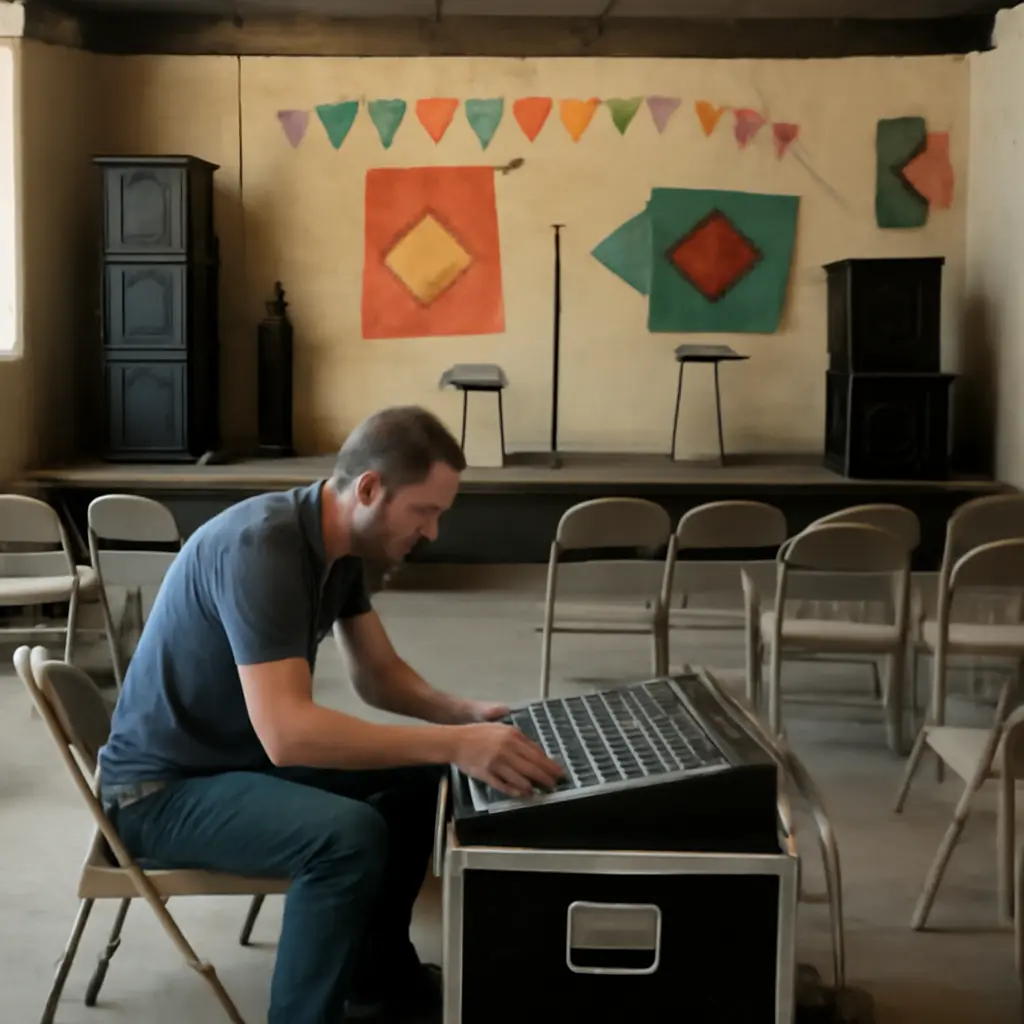
A music scene’s aesthetic is the shared look, sound, language, and set of places through which a community makes its music recognizable. Scenes endure not because they preserve one fixed style, but because people keep renewing its symbols and social spaces: from Jamaican sound-system culture and punk’s do-it-yourself ethic to hip-hop’s visual codes and electronic music’s club networks. Research on cultural scenes, music venues, and the creative economy helps explain why those identities persist—and why they can be threatened when places to gather disappear.
How scene aesthetics preserve music communities
A scene is more than a genre or a collection of artists. Sociologist Will Straw’s influential account of music scenes describes them as cultural spaces where people, musical practices, and local institutions come together. Aesthetic means the recognizable choices that give those spaces character: sound, clothing, graphic design, performance habits, venues, and shared ideas about what feels authentic. These elements help newcomers identify a community and help participants transmit its history.
The stakes are material as well as symbolic. The National Independent Venue Association’s 2020 survey, conducted during the COVID-19 shutdowns, reported that 90% of independent venues said they would close within months without emergency assistance. That finding showed how quickly a scene’s everyday infrastructure can become vulnerable. An aesthetic can circulate online, but its social life depends on people having places to perform, meet, learn, and experiment.
How music-scene aesthetics build collective identity
Music-scene aesthetics are collective signals, not simply decorative styles. Straw’s scene framework emphasizes relationships among local participants, musical activity, and the spaces in which culture is produced and exchanged. In practice, the aesthetic may include a sound, a visual vocabulary, a way of dressing, distinctive event rituals, and informal knowledge about where the community gathers. These signals create belonging, but they can also mark disagreement over who represents a scene and what counts as authentic.
The broad category contains different, overlapping forms: place-based scenes organized around cities or neighborhoods; translocal scenes connected across cities; and virtual or networked scenes built through recordings, forums, and social platforms. A single community can belong to all three. Its music might be locally rooted, exchanged internationally, and continually reinterpreted online.
Sound as a recognizable signature
A scene’s sound is the combination of musical choices that listeners learn to associate with its artists and community. It may involve instrumentation, rhythm, vocal style, production techniques, or a shared approach to performance. Detroit techno, for example, developed through the work of artists including Juan Atkins, Derrick May, and Kevin Saunderson, whose music combined electronic production with distinct ideas about futurism, dance, and urban life. A sound becomes a scene signature not only through recordings, but through DJs, audiences, clubs, radio, and the conversations that explain how to hear it.
Clothing, graphics, and other visual codes
Visual codes make a scene visible: clothing, posters, record sleeves, logos, photography, and the design of a venue all contribute. The Smithsonian’s National Museum of African American History and Culture presents hip-hop as a culture encompassing music, dance, fashion, visual art, and language—not merely a musical genre. That breadth helps explain why an aesthetic can survive changes in sound. A visual motif or style of self-presentation can connect generations, even as artists transform its meaning.
Shared values and the DIY ethic
A scene’s ethics are the beliefs and habits that shape how its members create and distribute culture. Punk’s do-it-yourself tradition is a clear example: musicians and fans organized shows, made recordings, designed flyers, and built independent networks rather than waiting for established institutions. DIY does not mean that scenes exist outside commerce. It describes a commitment to participation and self-direction that can persist even when artists later work with labels or larger venues.
How venues and rituals sustain scene aesthetics
Aesthetic identity becomes durable when people can enact it together. Clubs, rehearsal rooms, record shops, community radio, festivals, and informal gathering places connect artists with audiences and pass local knowledge between them. Music Cities Events and the Sound Diplomacy Music Cities Manual both frame music ecosystems as networks that include venues, workers, audiences, public policy, and creative businesses. This perspective matters because a scene cannot be understood through recordings alone: it also depends on the conditions that make music-making possible.
Venues as cultural infrastructure
A music venue is cultural infrastructure when it gives a community a dependable place to perform and gather. Small rooms are particularly important for emerging acts because they enable experimentation and direct contact with audiences. The National Independent Venue Association’s 2020 survey documented the severity of venue closures during the pandemic, drawing attention to their role as small businesses and community institutions. When a venue closes, the loss may include not only a stage but also a recurring meeting point, a route into the scene, and a setting where its aesthetic is learned.
Rituals that turn audiences into participants
Rituals are repeated practices that make a scene feel lived and shared. They can include a dance floor’s conventions, a local radio show, a record-release gathering, call-and-response between performers and audience, or an annual festival. Jamaican sound-system culture illustrates how music, technology, DJs, selectors, and collective listening can form a social practice rather than simply a way to play recorded tracks. These rituals let participants carry a scene’s values into new venues and new generations.
How scenes adapt without disappearing
A scene’s persistence is not the same as its staying unchanged. Styles evolve as new artists borrow, challenge, and recombine inherited forms. Digital platforms can extend a scene’s reach, while migration and touring connect local communities to wider networks. The result is often a shift in where a scene happens and who participates, rather than a simple end to its identity.
Local roots and translocal networks
A translocal scene links participants in different places through shared music and exchange while retaining meaningful local contexts. A genre can travel through touring, records, radio, and online communities, then acquire new characteristics in each city. Sociologist Andy Bennett’s writing on music, place, and globalization helps explain why local identity and international circulation are not opposites. Scenes can remain connected to a city’s histories even as their participants build relationships across borders.
Online circulation and the limits of digital visibility
Digital platforms make recordings, images, and event information easier to circulate beyond a scene’s home base. They can help geographically dispersed listeners find one another and preserve material that might otherwise be difficult to access. But online visibility does not replace every function of physical gathering. A stream cannot fully reproduce the relationships formed at a rehearsal, the trust built among organizers, or the local economic activity that supports a venue. Digital reach is strongest when it complements, rather than substitutes for, a scene’s human and physical networks.
Case study: Detroit techno’s evolving identity
Detroit techno demonstrates how a scene aesthetic can remain recognizable while its audience and geography expand. Its foundational artists developed electronic music in a city shaped by industrial history, Black cultural creativity, and changing urban conditions. As the sound circulated internationally, it influenced club music far beyond Detroit. Its continued connection to the city shows that global popularity need not erase a scene’s origin—provided artists, institutions, and audiences keep telling its local history and supporting its cultural infrastructure.
Conclusion: protect the conditions that keep scenes alive
Music-scene aesthetics endure through a combination of sound, visual codes, shared values, venues, and rituals. Place-based scenes and translocal networks show that identity can travel, while digital platforms can extend its reach; neither guarantees survival without people and institutions to sustain it. The vulnerability of independent venues documented by the National Independent Venue Association makes the practical point clear: cultural memory needs spaces and resources as well as recordings.
To help a scene persist, attend local shows, support independent venues and artists, learn the histories behind familiar styles, and make room for new participants to reshape them. Further reading in Will Straw’s work on scenes and the Sound Diplomacy Music Cities Manual can help readers understand how local music culture is built—and what it takes to keep it possible.
Sources: Will Straw, “Systems of Articulation, Logics of Change: Communities and Scenes in Popular Music,” Cultural Studies, 1991, https://doi.org/10.1080/09502389100490311; National Independent Venue Association, “Save Our Stages: A Report on the Independent Live Music Industry,” 2020, https://www.nivassoc.org/; Smithsonian National Museum of African American History and Culture, “Hip-Hop,” https://nmaahc.si.edu/explore/stories/hip-hop; Sound Diplomacy, “The Music Cities Manual,” https://www.musiccitiesevents.com/; Andy Bennett, “Consolidating the Music Scenes Perspective,” Poetics, 2004, https://doi.org/10.1016/j.poetic.2004.09.001; Kevin Saunderson, “The Origins of Detroit Techno,” Red Bull Music Academy Daily, https://daily.redbullmusicacademy.com/.